

Budget beauty is booming. From dollar stores to e-commerce platforms, affordable cosmetics are experiencing double-digit growth. In the US alone, dollar store beauty sales grew 10.6% year-over-year in 2025, outpacing every other retail channel.
But here's what nobody talks about: the faster customers choose, the harder fulfillment becomes.
When products are affordable, customers make quick decisions. They don't agonize over purchases—they just buy and try. This creates a fundamentally different operational challenge. SKUs multiply. Order velocity increases. And the margin for error shrinks to zero.
The real question isn't whether budget beauty is a good business. It's whether your operations can keep up.

Low-cost cosmetics don't mean low-complexity operations. In fact, the opposite is true.
When customers pay $50 for a premium product, they expect delays and invest time in research before purchasing. When they pay $5, they expect instant gratification—and instant resolution if something goes wrong.
This creates three operational realities:
1. Higher order volumes with lower per-order margins
2. More SKUs as brands test products quickly and rotate inventory faster
3. Lower tolerance for errors because the hassle of returns often exceeds product value
In this environment, operational excellence isn't a competitive advantage. It's survival.
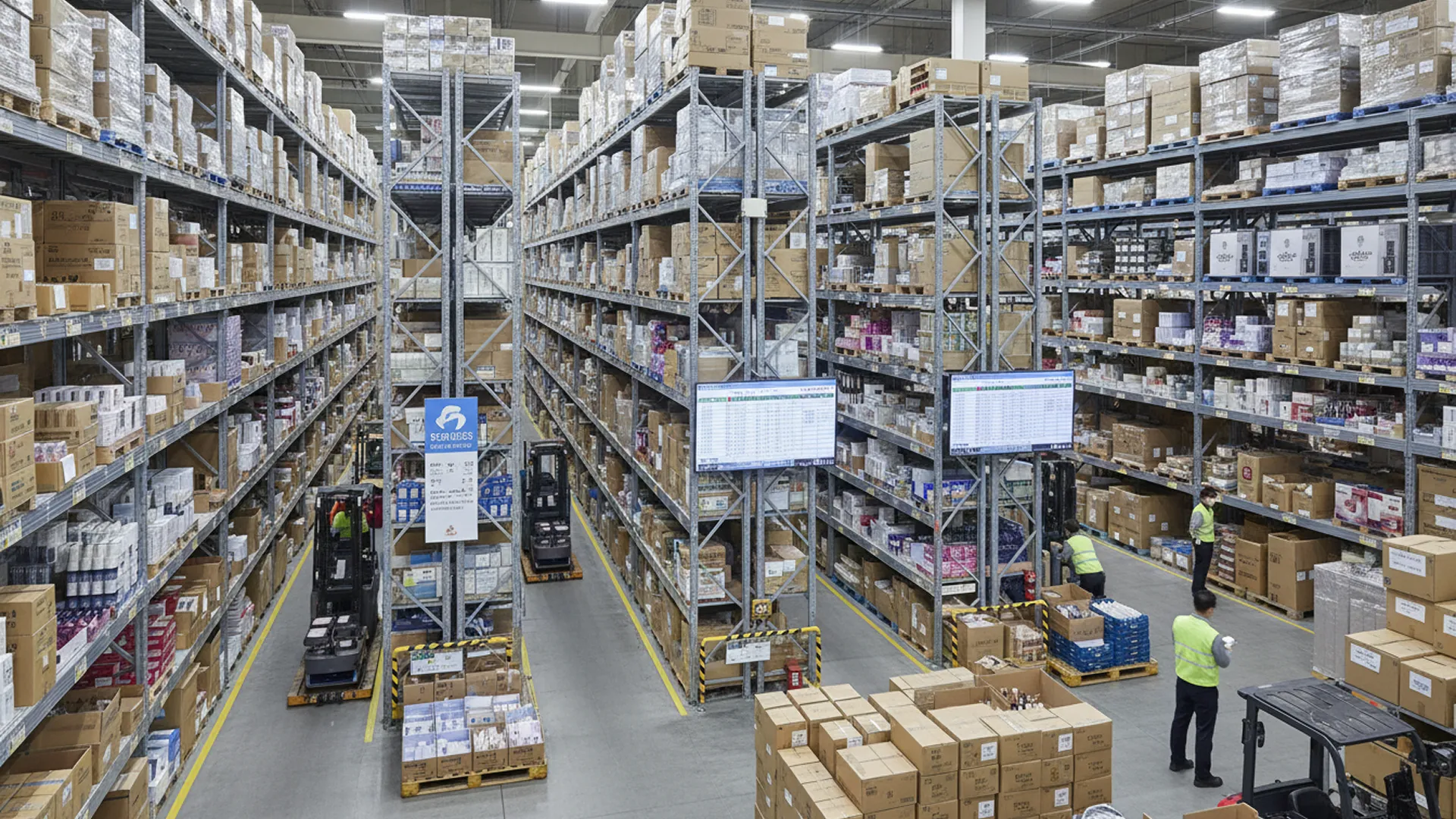
In our experience working with beauty brands across markets, the same three problems surface again and again. These aren't random failures—they're structural weaknesses that video documentation directly addresses.
The first question in almost every fulfillment dispute is simple: "When was this order shipped?"
If your team can't answer immediately, everything slows down. Was it part of today's batch? A promotional run? A bundle order? Without this context, a single inquiry bounces between CS, operations, and fulfillment teams—turning a 5-minute resolution into a 2-day investigation.
What high-performing operations do differently
They link shipment context instantly. Date, time, worker, order composition, and any special handling notes are accessible in one view. When a customer asks "when was this shipped?", the answer takes seconds, not hours.
How video documentation helps
With Realpacking's Advanced Video Documentation System, every shipment is recorded with timestamp and order ID. When disputes arise, your team pulls up the exact packing moment—no guessing, no cross-referencing spreadsheets. The video becomes the single source of truth.
In high-SKU environments, "we shipped it correctly" is the most common—and least convincing—response to customer complaints.
The problem? It's not verifiable. With dozens of similar-looking products, frequent composition changes, and promotional bundles, how do you prove
- The right items were included?
- Nothing was damaged during packing?
- No substitutions were made?
Without evidence, operations teams repeat the same explanation over and over. Customers don't believe it. Chargebacks pile up. Trust erodes.
What high-performing operations do differently
They don't rely on memory or assurances. They have visual proof of what was packed, when, and how.
How video documentation helps
Realpacking automatically records the packing process for every order. When a customer claims an item was missing or damaged, your CS team doesn't argue—they share the video. The conversation shifts from "trust us" to "here's proof."
This isn't just about winning disputes. It's about ending them faster and preventing chargebacks before they happen.
The most expensive operational failures aren't the big one-time disasters. They're the small issues that keep happening.
- The same SKU gets mispicked repeatedly
- The same packing station generates more complaints
- The same promotional campaigns create fulfillment chaos
When teams treat each complaint as an isolated incident, they miss the pattern. They solve the symptom but never fix the cause.
What high-performing operations do differently
They use claim data as operational intelligence. They track where issues cluster, which processes break down, and which structural changes would prevent recurrence.
How video documentation helps
Realpacking doesn't just record it creates searchable, analyzable records. When complaints spike for a specific SKU or time period, teams can review footage, identify root causes, and implement fixes.
Instead of asking "what went wrong this time?", high-performing teams ask "why does this keep happening?" and use video evidence to answer definitively.
Budget beauty competition isn't won on price alone. Prices have already converged. Product quality is table stakes.
What separates winning brands is operational credibility
the ability to prove, not just claim, that orders were handled correctly.
This requires a fundamental shift
<div style="display: flex; justify-content: center; width: 100%; overflow-x: auto;">
<table style="border-collapse: collapse; min-width: 300px; max-width: 100%;">
<thead>
<tr>
<th style="border: 1px solid #ddd; padding: 12px 16px; background-color: #f5f5f5; text-align: left;">Old Approach</th>
<th style="border: 1px solid #ddd; padding: 12px 16px; background-color: #f5f5f5; text-align: left;">New Approach</th>
</tr>
</thead>
<tbody>
<tr>
<td style="border: 1px solid #ddd; padding: 12px 16px;">"Trust us, we shipped it right"</td>
<td style="border: 1px solid #ddd; padding: 12px 16px;">"Here's the video proof"</td>
</tr>
<tr>
<td style="border: 1px solid #ddd; padding: 12px 16px;">Reactive dispute resolution</td>
<td style="border: 1px solid #ddd; padding: 12px 16px;">Proactive evidence collection</td>
</tr>
<tr>
<td style="border: 1px solid #ddd; padding: 12px 16px;">Treating complaints as costs</td>
<td style="border: 1px solid #ddd; padding: 12px 16px;">Using complaints as operational data</td>
</tr>
</tbody>
</table>
</div>
The brands that make this shift don't just reduce disputes. They build visible operations that customers—and partners—can trust.
Implementing video documentation doesn't require overhauling your entire fulfillment operation. Here's where to start:
1. Identify high-risk order types — Bundles, promotions, and high-value items benefit most from documentation
2. Start with dispute-heavy SKUs — Focus recording on products with the highest complaint rates
3. Connect to existing systems — Link video records to your order management and CS platforms
Track these metrics before and after implementation:
- Average dispute resolution time
- Chargeback rate
- Repeat complaint rate by SKU
- CS hours spent on fulfillment disputes
The budget beauty boom isn't slowing down. Dollar stores are expanding beauty sections. E-commerce platforms are doubling down on affordable cosmetics. Consumer expectations for fast, accurate fulfillment are only increasing.
The question isn't whether to compete in this market. It's whether your operations can scale with quality—and prove it.
Video documentation isn't about catching mistakes. It's about building operations so transparent that disputes become rare, resolutions become instant, and trust becomes your competitive advantage.
In budget beauty, the brands that win aren't the cheapest. They're the ones customers trust to get it right—every time.


