
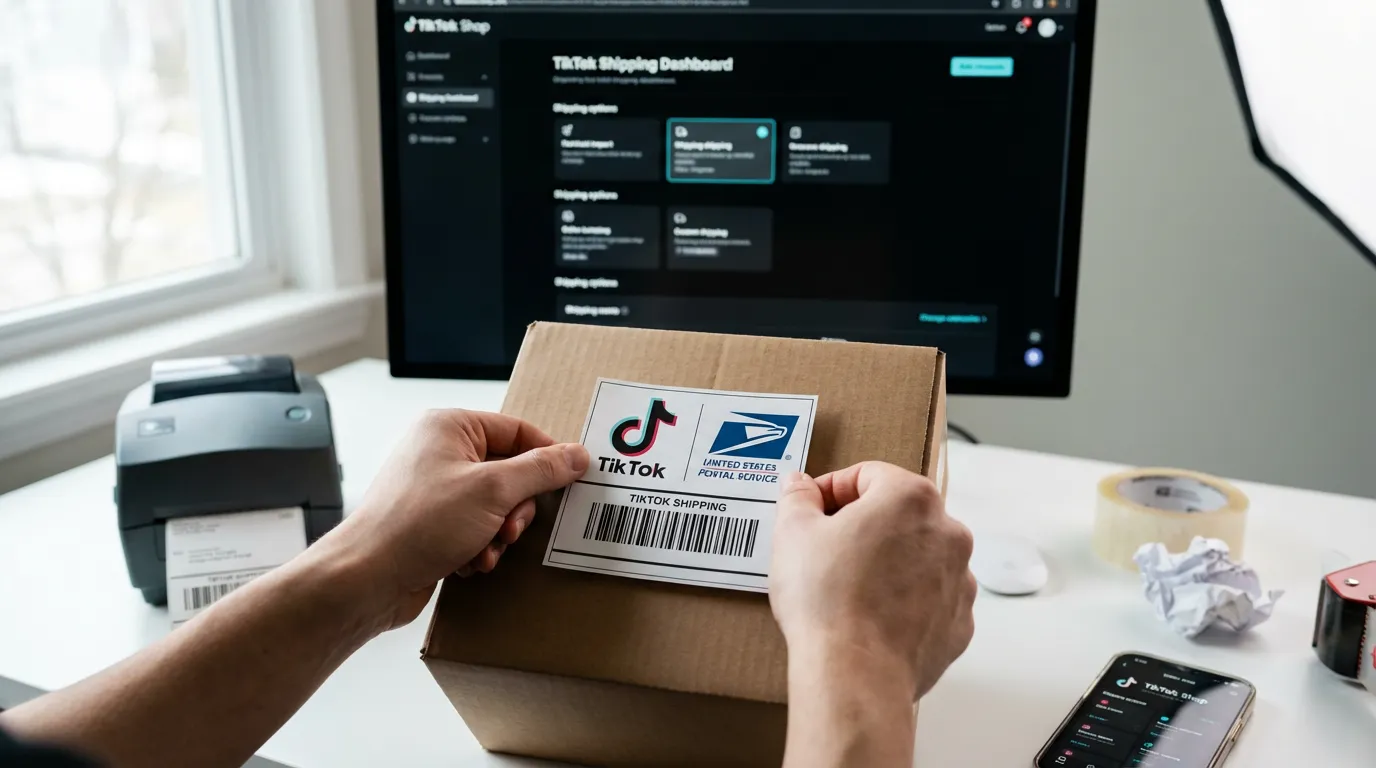
Platform logistics control refers to e-commerce platforms directly managing the entire logistics process—from shipping label generation to delivery data collection. TikTok Shop's January 2026 decision to ban external USPS labels and require sellers to use its proprietary TikTok Shipping system is the clearest example of this shift. The platform has also announced that "Seller Shipping" will be phased out entirely by March 2026, making platform-managed fulfillment mandatory.
This trend signals a fundamental change: platforms are taking control of delivery quality and data, while sellers' operational flexibility continues to shrink.

The approach TikTok Shop introduced represents the 4PL (Fourth-Party Logistics) model. While 3PL providers handle logistics operations, 4PL goes further—designing and orchestrating the entire logistics flow across multiple carriers and fulfillment partners.
TikTok Shipping contracts directly with USPS, negotiates rates, and generates labels on sellers' behalf. Sellers operate within the platform's logistics ecosystem rather than managing their own carrier relationships.
Why are platforms moving in this direction?
<div style="overflow-x: auto;">
  <table style="width: 100%; border-collapse: collapse; min-width: 500px;">
    <thead>
      <tr>
        <th style="border: 1px solid #ddd; padding: 12px 8px; text-align: left; background-color: #f5f5f5;">Purpose</th>
        <th style="border: 1px solid #ddd; padding: 12px 8px; text-align: left; background-color: #f5f5f5;">What It Means</th>
      </tr>
    </thead>
    <tbody>
      <tr>
        <td style="border: 1px solid #ddd; padding: 12px 8px;"><strong>Delivery Quality Control</strong></td>
        <td style="border: 1px solid #ddd; padding: 12px 8px;">Platforms directly manage delivery speed, tracking accuracy, and estimated delivery dates</td>
      </tr>
      <tr>
        <td style="border: 1px solid #ddd; padding: 12px 8px;"><strong>Shipping Data Ownership</strong></td>
        <td style="border: 1px solid #ddd; padding: 12px 8px;">Platforms capture dispatch times, arrival times, and issue logs</td>
      </tr>
      <tr>
        <td style="border: 1px solid #ddd; padding: 12px 8px;"><strong>Advertising-Logistics Integration</strong></td>
        <td style="border: 1px solid #ddd; padding: 12px 8px;">Purchase and shipping data merge, enabling precise ad measurement and retargeting</td>
      </tr>
    </tbody>
  </table>
</div>
This isn't isolated to TikTok. Major platforms are increasingly integrating logistics into their core offerings—shifting the competitive axis from "who has more sellers" to "who controls the logistics experience."
The US market shows multiple approaches to platform logistics control, each with different implications for sellers.
Amazon FBA (Fulfillment by Amazon) is a fulfillment service where Amazon handles storage, picking, packing, shipping, and returns. Sellers send inventory to Amazon fulfillment centers and focus on products and sales.
It's convenient—and it unlocks Prime eligibility. But the trade-offs are significant:
While FBA operates more as a 3PL service than a 4PL orchestrator, it demonstrates how platforms gain leverage when they control fulfillment.
Shopify took a different path. After building its own fulfillment network, it sold most of its logistics operations to Flexport in 2023 and now operates as a fulfillment orchestrator—connecting merchants to fulfillment partners through its platform rather than owning warehouses directly.
This "asset-light 4PL" model means Shopify coordinates logistics across partners while maintaining software integration as its core value. The promise for sellers: Amazon-level delivery speed without building your own infrastructure.
But the pattern remains similar. The platform sets quality standards, manages integrations, and defines what "good fulfillment" looks like. Seller data flows through the platform's systems.
Both approaches share the same direction: own the delivery experience, capture the data, offer sellers convenience in exchange for operational dependence.

For sellers, platform logistics control is a double-edged sword.
<div style="overflow-x: auto;">
  <table style="width: 100%; border-collapse: collapse; min-width: 500px;">
    <thead>
      <tr>
        <th style="border: 1px solid #ddd; padding: 12px 8px; text-align: left; background-color: #f5f5f5;">Advantages</th>
        <th style="border: 1px solid #ddd; padding: 12px 8px; text-align: left; background-color: #f5f5f5;">Disadvantages</th>
      </tr>
    </thead>
    <tbody>
      <tr>
        <td style="border: 1px solid #ddd; padding: 12px 8px;">Reduced operational burden</td>
        <td style="border: 1px solid #ddd; padding: 12px 8px;">Less negotiating power and flexibility</td>
      </tr>
      <tr>
        <td style="border: 1px solid #ddd; padding: 12px 8px;">No need to manage logistics directly</td>
        <td style="border: 1px solid #ddd; padding: 12px 8px;">Shipping costs, payment cycles, and dispute rules are platform-determined</td>
      </tr>
      <tr>
        <td style="border: 1px solid #ddd; padding: 12px 8px;">Consistent delivery quality</td>
        <td style="border: 1px solid #ddd; padding: 12px 8px;"><strong>Operational data exists only within the platform</strong></td>
      </tr>
    </tbody>
  </table>
</div>
The convenience is real. But so is the dependency.
Delegating logistics to platforms isn't inherently problematic. It can be an efficient choice. The real question is: where does your operational data live?
The more you rely on platform logistics, the more your dispatch records, shipping history, and quality data exist only inside their systems. If you switch platforms—or face a dispute—you may have no independent records to support your position.
Questions worth asking now:
As platforms tighten logistics control, the value of documenting your own operations—from packing to dispatch—is increasing.
Platform-provided data belongs to the platform. When you leave, it disappears. But records you create yourself remain. They become the foundation for proving your operational quality—regardless of which platform you sell on or which logistics partner you use.
The shift isn't about avoiding platform logistics. It's about ensuring that even when you use platform logistics, you retain your own records.
<div style="overflow-x: auto;">
  <table style="width: 100%; border-collapse: collapse; min-width: 500px;">
    <thead>
      <tr>
        <th style="border: 1px solid #ddd; padding: 12px 8px; text-align: left; background-color: #f5f5f5;">Old Approach</th>
        <th style="border: 1px solid #ddd; padding: 12px 8px; text-align: left; background-color: #f5f5f5;">New Approach</th>
      </tr>
    </thead>
    <tbody>
      <tr>
        <td style="border: 1px solid #ddd; padding: 12px 8px;">"Trust us, we shipped it correctly"</td>
        <td style="border: 1px solid #ddd; padding: 12px 8px;">"Here's the documented proof"</td>
      </tr>
      <tr>
        <td style="border: 1px solid #ddd; padding: 12px 8px;">Rely on platform data</td>
        <td style="border: 1px solid #ddd; padding: 12px 8px;">Maintain independent operational records</td>
      </tr>
      <tr>
        <td style="border: 1px solid #ddd; padding: 12px 8px;">React to disputes</td>
        <td style="border: 1px solid #ddd; padding: 12px 8px;">Proactively collect evidence</td>
      </tr>
    </tbody>
  </table>
</div>
The platform logistics shift is accelerating across global e-commerce. Platforms are integrating logistics into their core offerings, and sellers benefit from the convenience.
But the sellers who thrive long-term are those who understand the trade-offs—and take steps to maintain visibility into their own operations.
What this means in practice
In the era of platform logistics control, the winning strategy isn't to opt out. It's to participate while retaining what matters: your data, your records, your operational credibility.


