
A RealLog from the floor, where "we have it on CCTV" and "we can show you" turn out to be two different things.
Short answer: Warehouse CCTV records by camera and clock, not by order, so it rarely works as packing video proof. Answering one claim means estimating when the parcel shipped, scrubbing the timeline, finding the scene, and trimming a clip. Order-linked packing video saves each pack session under the order's own barcode, so the proof comes back by order ID.
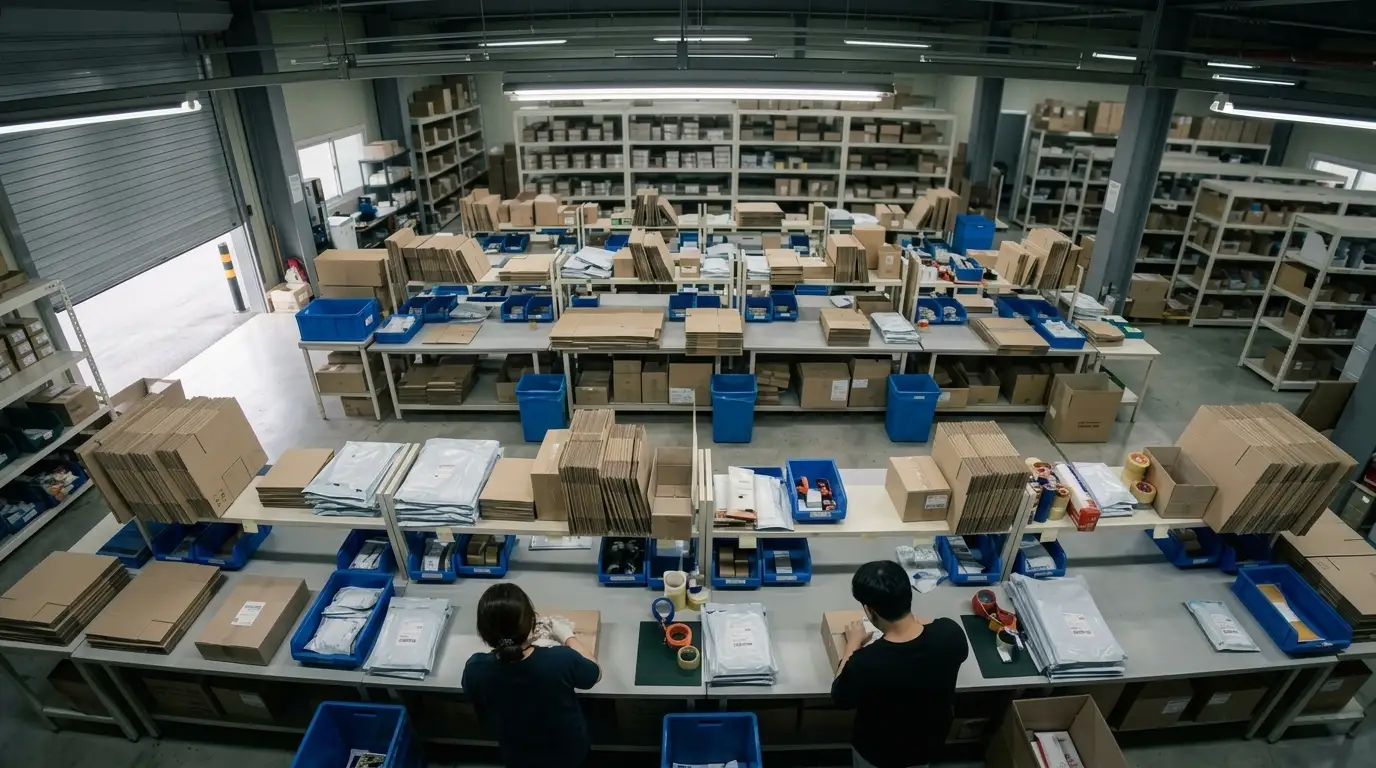
Walk in and out of fulfillment operations, large and small, for a few years, and one sentence keeps repeating itself in places that otherwise have nothing in common. It begins with "we have it on CCTV, but..." This is not a new problem. For any operation that leans on CCTV to handle claims, it is a familiar spot, and one that rarely gets touched.
When cameras first go in, the purpose is almost always safety and site security. Is anyone getting hurt, is anything walking out the door, is dock traffic flowing the way it should. So the camera doesn't sit over one packing station. It hangs high and covers a whole zone at a time.
The catch is that this point of view was never designed to capture the packing of one parcel. What the item was, what condition it left in, how it was packed: none of that survives a wide-frame shot from ceiling height. Outbound, inbound, and returns all get argued one order at a time, and a surveillance view is not aimed at that unit.
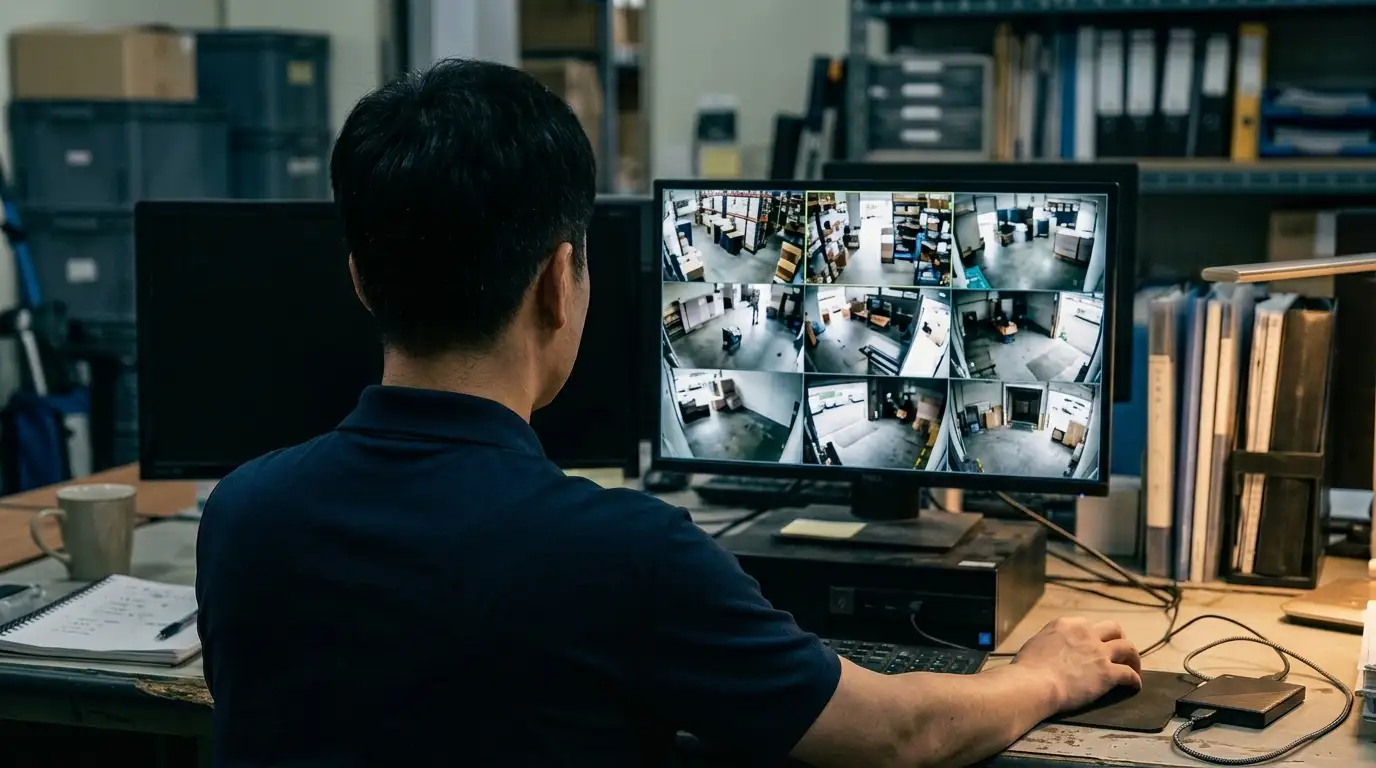
The burden starts the moment the claim arrives. A wrong-item claim is the common shape: a customer writes in to say what they received isn't what they ordered. The person handling it can't call that order up on screen, because there is no lookup by order ID. They estimate the window the parcel probably went out in and scrub back through the recording.
Consultants who have walked a lot of floors all point at the same spot. When a manager in a meeting trails off with "we have it on CCTV, but...," what follows is usually the same story. They guess at the timestamp, roll through footage clip by clip, and hunt for the scene. Even someone who does this often quietly loses more of the day to it than they expect.
Finding it isn't the end of the job. That segment then has to be trimmed and turned into something you can send a customer. Every claim means rewinding, hunting, cutting, and attaching all over again. More effort goes into showing the work was done correctly than into doing it.
So the obvious question comes up. Why not swap in better cameras? We get asked this constantly, and the answer is less simple than it sounds.
Security cameras are usually mounted high because they need to cover the whole room. Raising the pixel count does not turn a wide overhead view into evidence for a single order. Higher resolution gives you a cleaner picture filed under the same wrong unit: the camera and the clock, not the order.
What separates a heavy workload from a light one isn't the camera spec. It's whether the footage is tied to the order, so that when you need one specific order, you can pull only that one.
The two look similar on a monitor. They differ in what a recording is filed under, and that single difference decides both how much work a claim costs you and whether the footage functions as packing video proof at all.
<div style="overflow-x: auto;">
  <table style="width: 100%; border-collapse: collapse; min-width: 500px;">
    <thead>
      <tr>
        <th style="border: 1px solid #ddd; padding: 12px 8px; text-align: left; background-color: #f5f5f5;"></th>
        <th style="border: 1px solid #ddd; padding: 12px 8px; text-align: left; background-color: #f5f5f5;">Warehouse CCTV</th>
        <th style="border: 1px solid #ddd; padding: 12px 8px; text-align: left; background-color: #f5f5f5;">Order-linked packing video</th>
      </tr>
    </thead>
    <tbody>
      <tr>
        <td style="border: 1px solid #ddd; padding: 12px 8px;"><strong>Installed for</strong></td>
        <td style="border: 1px solid #ddd; padding: 12px 8px;">Site security, safety, theft prevention</td>
        <td style="border: 1px solid #ddd; padding: 12px 8px;">Evidence for one order</td>
      </tr>
      <tr>
        <td style="border: 1px solid #ddd; padding: 12px 8px;"><strong>Camera position</strong></td>
        <td style="border: 1px solid #ddd; padding: 12px 8px;">High on the ceiling, one zone per camera</td>
        <td style="border: 1px solid #ddd; padding: 12px 8px;">At the packing station, framed on the parcel</td>
      </tr>
      <tr>
        <td style="border: 1px solid #ddd; padding: 12px 8px;"><strong>A recording is filed under</strong></td>
        <td style="border: 1px solid #ddd; padding: 12px 8px;">Camera and time</td>
        <td style="border: 1px solid #ddd; padding: 12px 8px;">The order's barcode</td>
      </tr>
      <tr>
        <td style="border: 1px solid #ddd; padding: 12px 8px;"><strong>To find one moment</strong></td>
        <td style="border: 1px solid #ddd; padding: 12px 8px;">Estimate the time window, scrub the timeline</td>
        <td style="border: 1px solid #ddd; padding: 12px 8px;">Search the order ID</td>
      </tr>
      <tr>
        <td style="border: 1px solid #ddd; padding: 12px 8px;"><strong>What the customer receives</strong></td>
        <td style="border: 1px solid #ddd; padding: 12px 8px;">A clip someone trimmed by hand</td>
        <td style="border: 1px solid #ddd; padding: 12px 8px;">The original record for that order</td>
      </tr>
      <tr>
        <td style="border: 1px solid #ddd; padding: 12px 8px;"><strong>Retention</strong></td>
        <td style="border: 1px solid #ddd; padding: 12px 8px;">Continuous footage, overwritten on a cycle</td>
        <td style="border: 1px solid #ddd; padding: 12px 8px;">One record per order, kept with the order for the retention period you set</td>
      </tr>
      <tr>
        <td style="border: 1px solid #ddd; padding: 12px 8px;"><strong>Also covers returns</strong></td>
        <td style="border: 1px solid #ddd; padding: 12px 8px;">Only if someone remembers the time it arrived</td>
        <td style="border: 1px solid #ddd; padding: 12px 8px;">Yes, when inbound zones are recorded the same way</td>
      </tr>
    </tbody>
  </table>
</div>
The friction is a hurdle at any size. It becomes far more visible in operations where outbound volume is climbing.
Sell more and the claims and client inquiries climb with it, which means the hours spent rewinding, hunting, and trimming climb too. Teams handling logistics for fast-growing brands tend to flag this early. Getting by on CCTV may be fine right now, but looking ahead at where volume is heading changes the calculation. As volume grows, so do support tickets, returns, and refunds, and it's easier to put a system in place ahead of that than to absorb it later.
The math moves fastest in categories with a high average order value, like luxury and fashion. The compensation on a single claim is large, and the hours someone spends scrubbing footage land in payroll on top of it. Lay the monthly outbound count, the claim rate, the time spent responding, and the money buried in returns and refunds side by side, and you can see the point where holding on to the current method costs more than putting a real system in.
Three parts of the job change once the retrieval unit is the order rather than the clock.
Retrieval stops being a search. You load the order's packing footage by order ID, with no guessing at timestamps. Handing it over stops being an editing job, because the record for that order is already the thing you send. And returns stop being the blind spot, because inbound can be recorded the same way, which shrinks the back and forth over what condition something was in when it left and when it came back.
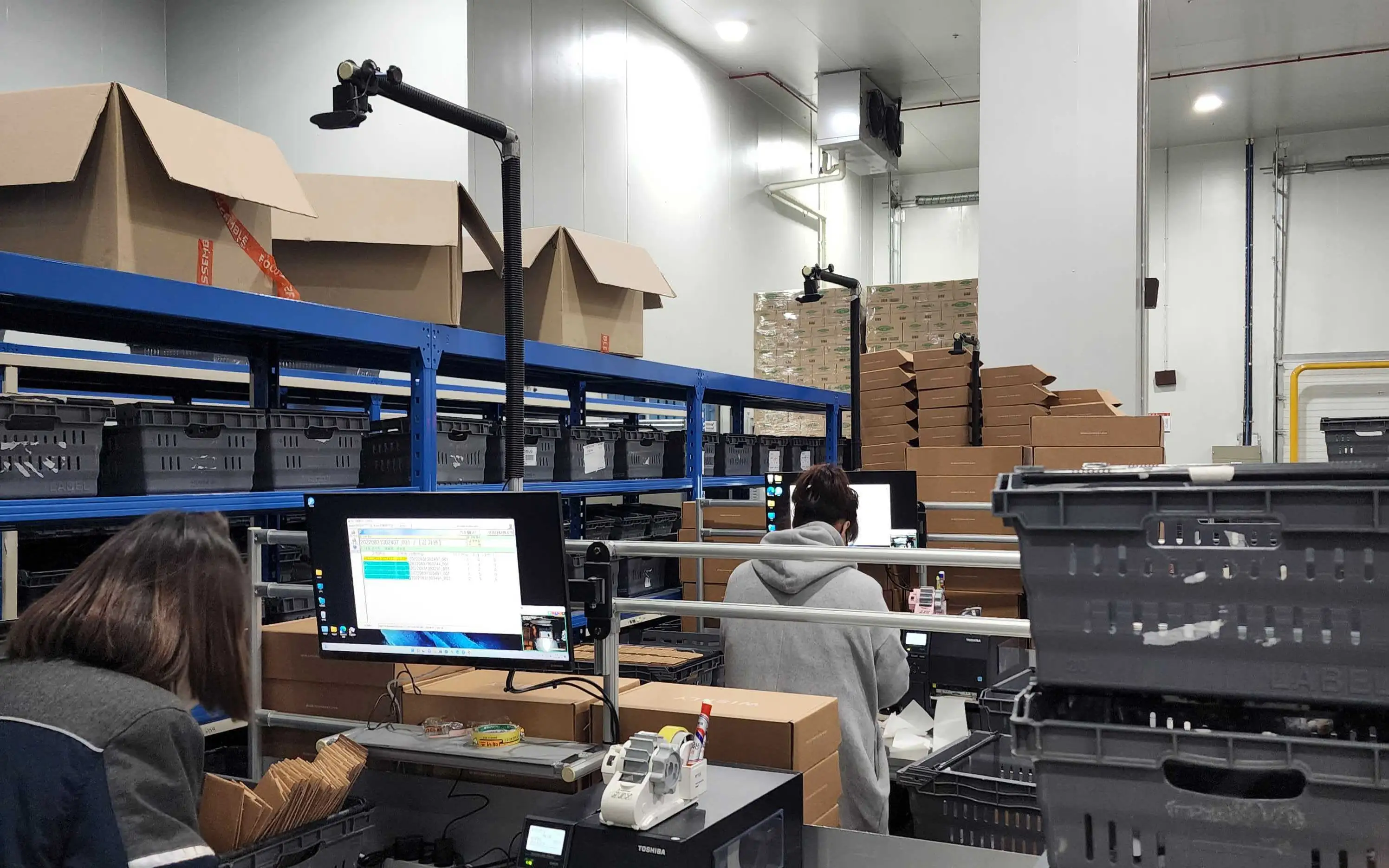
This is the unit Realpacking is built on. The Realpacking Recording Program saves each session under the barcode the worker scans, whether that's a shipping label or a pick list, so no WMS integration is required to link a record to an order. Barcode Auto-Recognition covers spots where a handheld scanner isn't practical, such as a conveyor line or a sealing station, by starting the recording when the label enters the camera's view. From the Realpacking Web Admin, a video can be shared with a customer as a link, an SMS, or an email, and the customer opens the original record rather than an edited excerpt. Where a full video is more than the zone needs, the Snapshot type saves the screen at the moment of the scan as a single image instead.
Take it one step further and these records aren't only claim material. They become a point of contact, a way to show a customer what a brand is like at the moment the box gets opened. A record kept to defend yourself turns into a record you willingly put in front of people.
Keep this question inside the logistics team and it always ends in the same place: replace the cameras or don't. What years of walking floors makes clear is that lifting the same record up to the company level changes the question entirely.
Footage from the ceiling camera usually starts and ends inside the logistics team. You pull it out when something goes wrong, then put it away. A record tied to each order doesn't stay put like that. Support uses it as evidence while answering a ticket. Marketing uses it as the moment the customer opens the box. Material kept for defense becomes an asset the company can put in front of a customer.
How far you can take it depends on how the floor is built. An automated center and a hand-packing station put the camera in different places. Whether logistics is outsourced or run in your own warehouse changes who should be able to see what. Even within the same category, almost no two operations are configured alike. That's why designing the setup comes before choosing the equipment. Decide how far you intend to use the record, not how to shoot it, and everything after that falls into place.
It can, but only after manual work. CCTV is filed by camera and time, not by order, so someone has to estimate when the parcel shipped, scrub the timeline to find the scene, then trim and send a clip. It works for the occasional claim, but it doesn't scale once volume climbs.
Order-linked packing video is a recording of the pack session that is saved under that order's identifier, usually the barcode on the shipping label. Because the record and the order share a key, a support agent retrieves the exact session by searching the order ID instead of scrubbing continuous footage.
No. The two serve different purposes and generally coexist. CCTV stays in place for site security and safety, while order-level recording is added at the packing station, where the parcel and its label are in frame. The decision is about what a record is filed under, not about camera specs.
Yes, when inbound zones are recorded the same way. Returns are argued one order at a time too, so a record tied to the returned order gives both the seller and the fulfillment center the same reference for the condition an item arrived in, rather than two competing recollections.


