
On screen, the order is marked complete. On the warehouse floor, that's where the second operation begins.
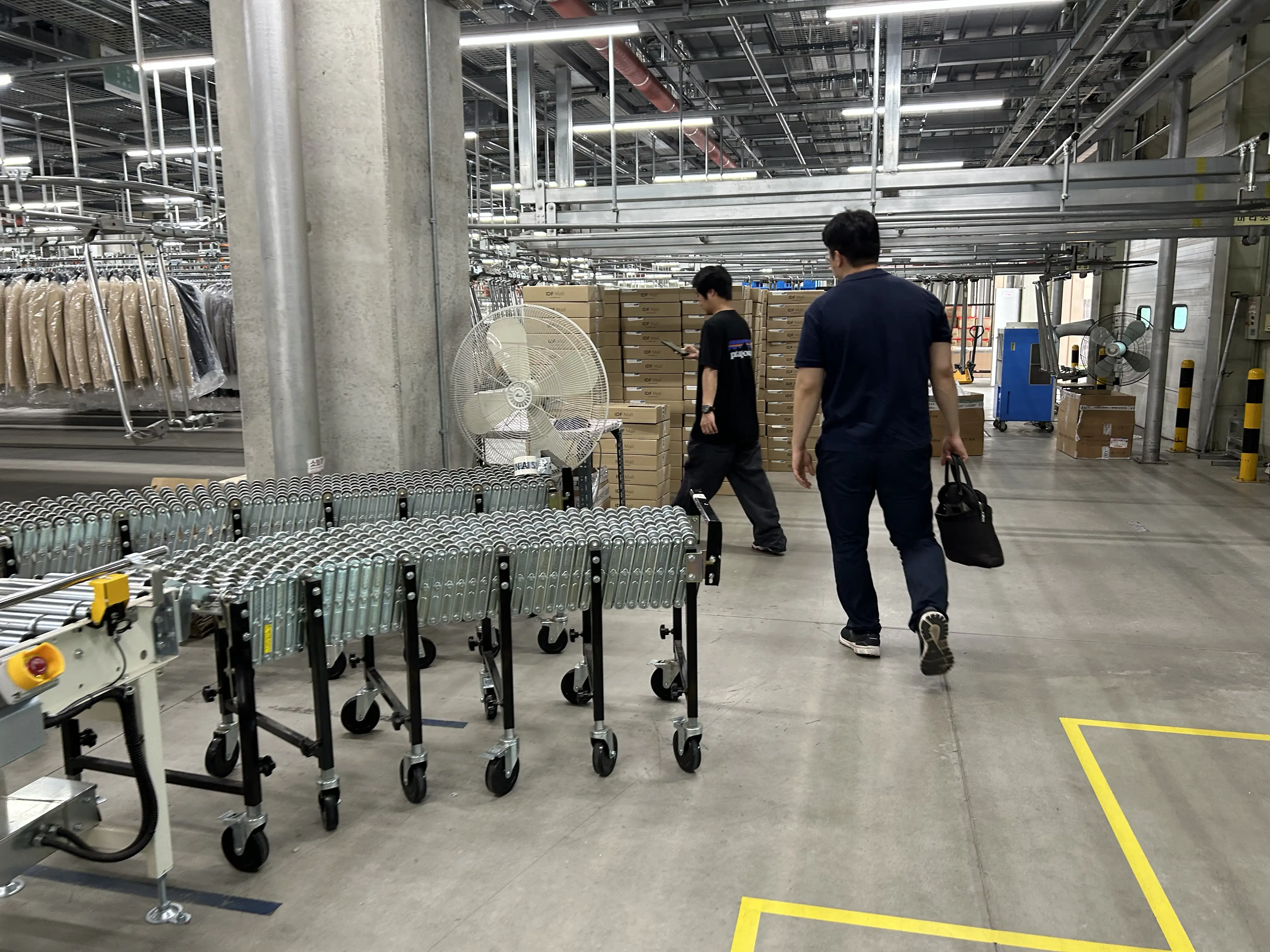
This is a RealLog, a story from the floor. Today's comes from one corner of a fashion fulfillment operation: the spot where returned boxes pile up by the armful.
On the sales screen, the transaction reads as closed. But walk into the fulfillment center and you'll find those very "closed" orders stacked right back up, box after box. A fashion return isn't the end of a sale. It's the signal that a second job is about to begin.
There's a reason fashion is uniquely demanding in logistics. The same garment splits into colors and sizes, and the number of SKUs to manage explodes. On top of that, return rates run higher than in almost any other category. People order, try it on, and send it back if it doesn't fit; the color looks different from the screen, so back it goes; shoppers order several sizes at once and keep only one.
So fashion returns arrive in sheer volume. From the moment the boxes stack up, a separate line kicks in: inspecting, sorting by condition, restoring items to sellable shape, repackaging. Handling what comes back is as much the real work of the floor as sending things out.
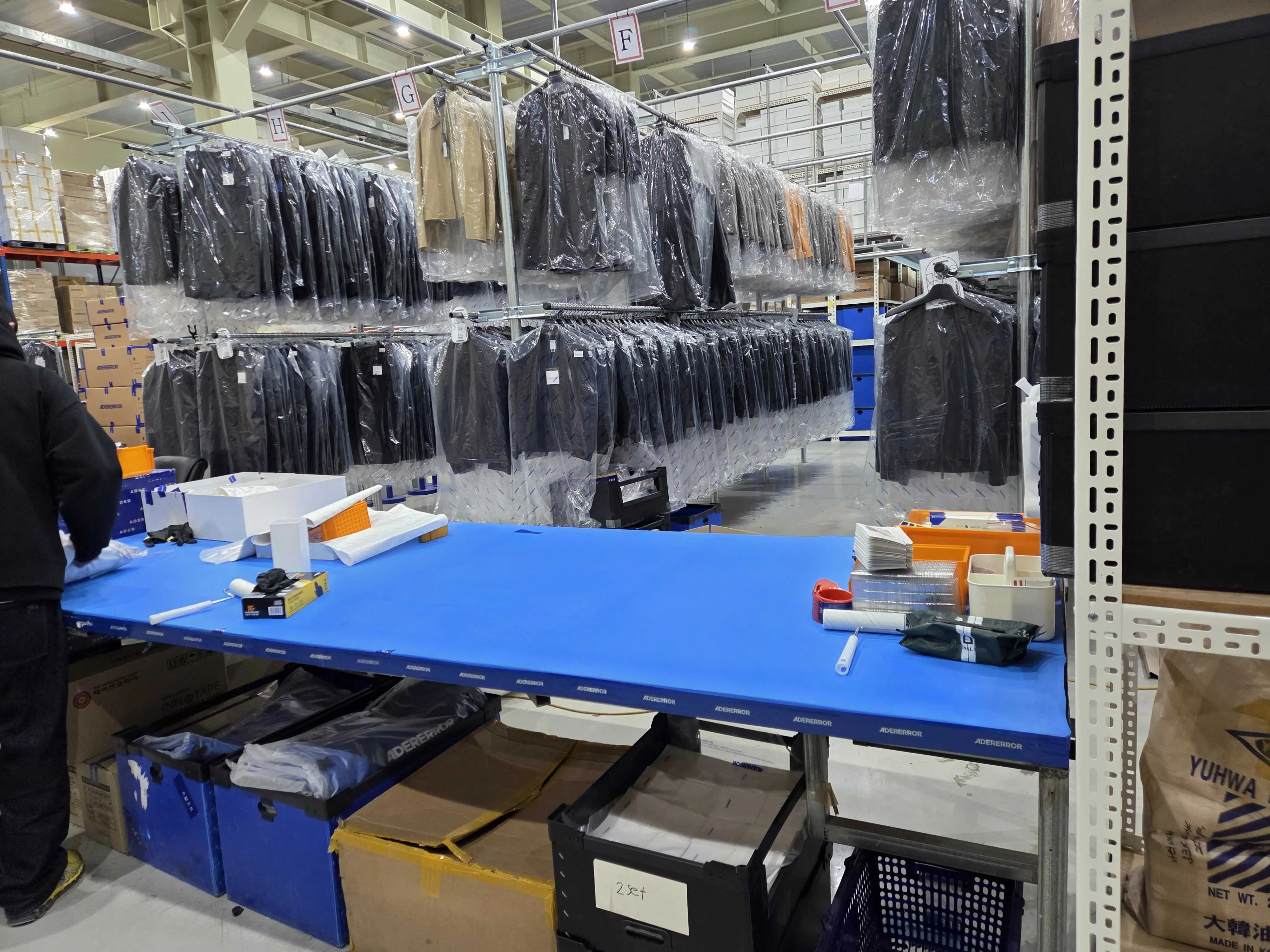
The first thing a seller usually looks at is the return rate. What percentage came back. But the real cost piles up quietly in the column right next to it.
Turning a returned garment back into a sellable product is the work of reconditioning. It isn't just receiving an item and putting it back on the shelf. It means sorting items into condition grades and restoring them to life. At the inspection table, each piece is spread out and checked: is the tag still attached, is there any pilling or stretching, has it picked up an odor?
Even among returns, some have lost their tags and are hard to resell; others are perfectly fine but get downgraded because the packaging was damaged. One by one, items get graded, then reconditioned and repackaged before they can finally go back on the shelf. And in many operations this reconditioning is billed as separate labor. The higher the return rate, the longer this line runs. It stays invisible if you only look at sales numbers, but the more return-heavy the fashion business, the more cost quietly accumulates on one side of the settlement sheet.
See a fashion return as merely "a customer changed their mind" and you miss this line entirely. On the floor, you feel it every day: a return is a second labor cost.
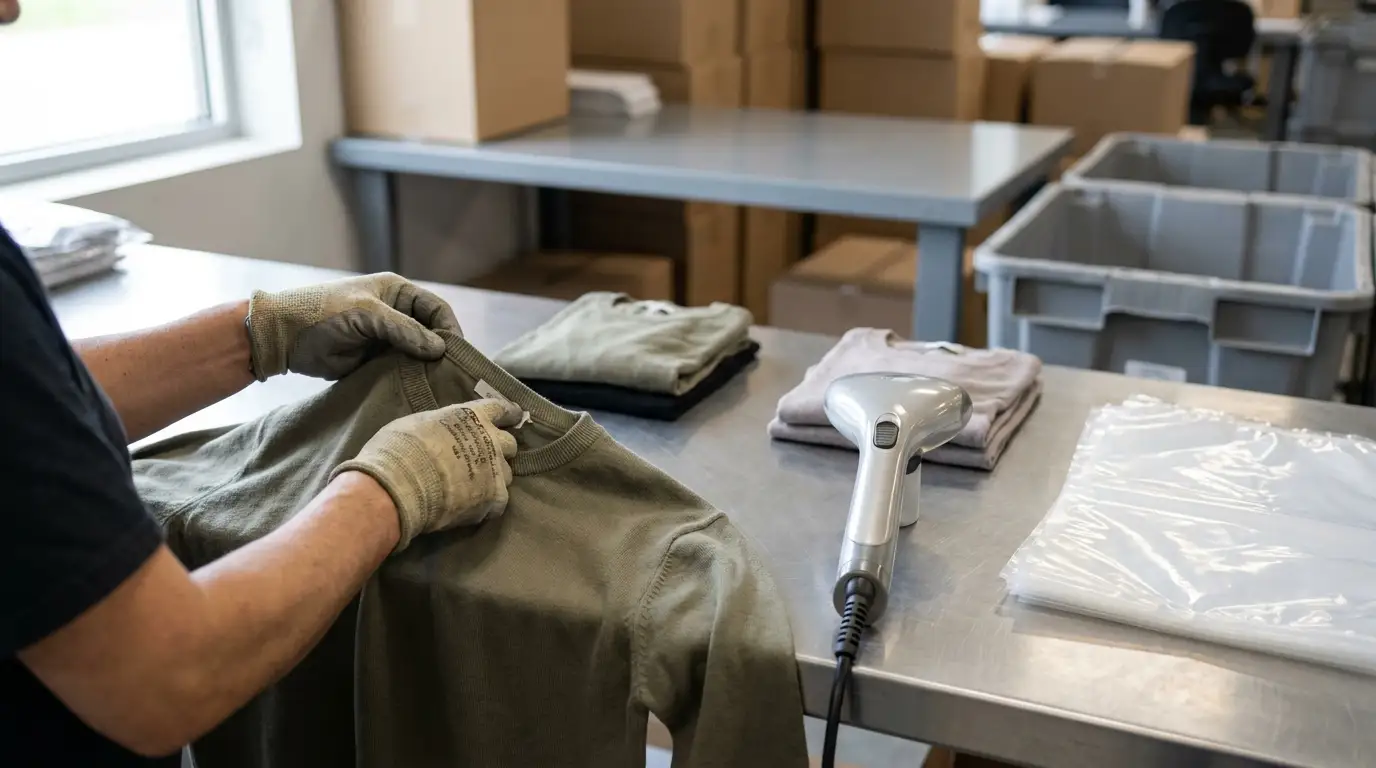
Grading items for reconditioning, and arguing a case with a customer, both come down to the same single question: what condition did this garment come back in?
The problem is that condition is the first thing to disappear. Once returns pile up by the armful, it gets hard to tell what came in how. Boxes are opened and stacked to one side, and while items are inspected one at a time, which garment came from which order in what condition lingers only briefly in a worker's memory and notes before it's gone. When hundreds of items cross the same table in a day, you're left with no good way to reconstruct the original condition of that one item when a dispute finally arises.
There are stories you hear often on the floor. A customer swears they never wore it, yet a lens cloth turns up in the pocket; sometimes a new item is bought and an old one is sent back in its place. But if you don't capture that moment, there's no way to tell afterward whose account is correct.
Here's something worth pausing on. Tighten inspection hard to stop a handful of suspicious returns, and that friction gets carried by the honest majority who returned things in good faith. When you can't tell who's an honest return and who isn't, the well-intentioned many end up under the same suspicion. If the condition as it arrived is preserved, you can lower the level of suspicion while still holding the line where it needs holding.
And this isn't only the seller's gain. When the condition at the moment of arrival is preserved, the fulfillment center handling the return finds it far easier to assign grades, and clashes with the seller over who's accountable go down, because who damaged what is on record from the start.
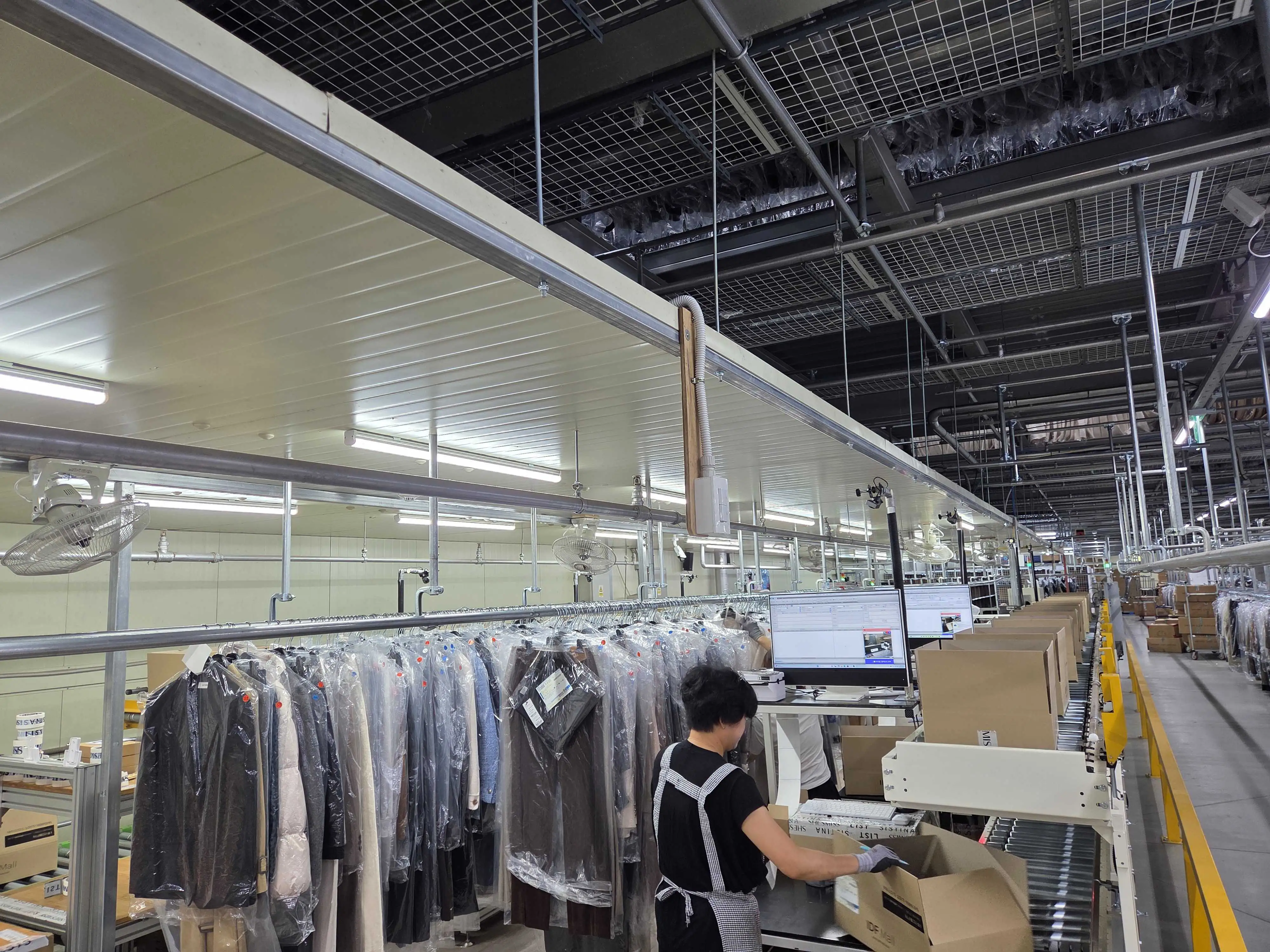
Maybe that's why the mood on fashion logistics floors is slowly shifting. More operations are choosing not to let the moment a return arrives slip by, but to keep a record of what condition it came back in. You increasingly hear managers on the floor talk about finding ways to document the outbound and return process on video.
What's interesting is that this isn't just one floor's quirk. The outside world has started asking for the same thing. In e-commerce, when a seller wants to refuse a return, the burden tends to fall on the seller to show that the item came back too damaged to resell, and the reason cited most often is value loss such as signs of wear. The broader direction is hard to miss: disputes are increasingly settled by evidence rather than assumption, and some large platforms have already begun requiring video proof before they will grant return-related compensation. From the inside it's reconditioning and disputes; from the outside it's rules and platforms; and every arrow points to the same thing, the item's condition at that moment.
That said, a record doesn't sort out the truth on its own. Video isn't a machine that decides who's right for you. What it does is put two people who remember things differently in front of the same screen. It turns a dispute from a contest of claims into a check of facts. And once it is known that a record is being kept, the urge to simply insist tends to shrink on its own.
See fashion returns only as a loss to be blocked, and all you can do is tighten inspection. But step onto the floor and you find returns don't get blocked that way. The moment you accept them as a second operation to be managed rather than blocked, what you need in place changes. Can you preserve the condition at the moment an item arrives, and can you pull that scene back up when you need it? This is the gap tools like Realpacking's video record are built to close. Whether you can answer that question makes a bigger difference the more return-heavy your fashion business is.


